
Running a sports facility is about efficiency, automation, and fan experience, all driven by technology.
Sports facility managers are searching for ways to streamline operations, cut rising costs, and meet the growing expectations of athletes, members, and fans.
They’re asking:
- How can AI and data analytics make scheduling, maintenance, and member engagement smarter?
- Which technologies improve ROI rather than add complexity?
- And what strategies are helping modern facilities stay profitable year-round?
This guide explores where the industry is headed, from smart maintenance systems and digital membership tools to sustainability initiatives and data-driven decision-making.
Whether you’re managing a local training center or a multi-venue complex, understanding these trends will help you stay competitive, future-proof your operations, and deliver an experience that keeps athletes coming back.
Why the Future of Sports Facility Management Matters Now
Facility managers are shaping community experiences, sustainability outcomes, and long-term profitability. Acting now matters because the gap between modernized operations and status-quo management is widening fast.
Here are five reasons the future can’t wait:
- Competitive advantage compounds early: Facilities that adopt connected systems, automated scheduling, predictive maintenance, and personalized fan engagement aren’t just more efficient today; they’re building data flywheels and brand loyalty that will be hard to replicate later.
- Operational costs are shifting from fixed to flexible: Energy optimization, telemetry-driven maintenance, and smart resource allocation cut recurring costs every season.
- Sustainability is now a baseline: Sponsors, fans, and local governments expect measurable progress on energy use, waste reduction, and accessibility. Facilities that can prove it earn trust, goodwill, and easier approvals for future expansions.
- Venues must perform year-round: Future-ready sports complexes are transforming into multipurpose hubs, hosting tournaments one week and concerts or conferences the next. Flexible scheduling, modular design, and smarter staffing make revenue steadier and spaces better used.
- Data and talent define resilience: Every check-in, concession, and sensor feed generates intelligence that improves planning and safety. Building that foundation now, and training staff to use it, creates a more adaptive, insight-driven operation long before the next disruption hits.

Key Technology Trends Shaping Sports Facility Management
From AI-driven maintenance to IoT-enabled sustainability, the tools now defining daily operations are setting long-term cost and performance baselines. Here are the top technology trends shaping the future of sports facility management.
1. AI-driven operations and maintenance
AI is now embedded into modern CMMS (Computerized Maintenance Management Systems) to triage tickets, forecast equipment failures, and automate vendor dispatch.
According to Deloitte, AI-based predictive maintenance can cut maintenance costs by up to 25% and reduce unexpected breakdowns by as much as 70%. For facilities where refrigeration, HVAC, and lighting systems dominate the budget, these gains compound fast.
Beyond cost, the value is operational clarity. Ice rinks, indoor pools, and multipurpose venues are already using these tools to predict ice-plant wear, monitor air quality, and anticipate turf or lighting system degradation.
In fact, the global AI in Sports market, which includes venue operations, analytics, and performance systems, was valued at $1.2 billion in 2024 and is projected to grow at a 14.7% CAGR through 2034. That growth is driven by a clear ROI story: less downtime, longer asset life, and more predictable capital planning.
A sports facility management software like EZFacility is already moving in this direction. The platform integrates scheduling, membership, and marketing tools with emerging AI features, most notably within its Advanced Email Campaigns.
These AI-powered assistants help draft personalized emails, automate communication, and analyze engagement data, giving operators the same kind of predictive, time-saving efficiency that AI brings to maintenance and operations.
See it in action 👇
2. IoT Sensors for Energy and Asset Performance
Connected sensors now monitor HVAC loads, ice-plant performance, lighting, and water systems in real time, turning guesswork into measurable data. IBISWorld’s report notes that energy and maintenance account for over 40% of controllable facility costs, pushing operators to deploy telemetry and condition-monitoring tools that can automatically adjust systems for temperature, occupancy, or time of day.
Modern IoT platforms feed this data into dashboards that visualize performance by surface, hour, or event with usage tracking and maintenance visibility. Managers can see, for example, when an air-handling unit is drawing too much current, when ice thickness is suboptimal, or when lighting zones are running beyond programmed hours. Over time, that insight compounds into operational savings and smarter capital planning.
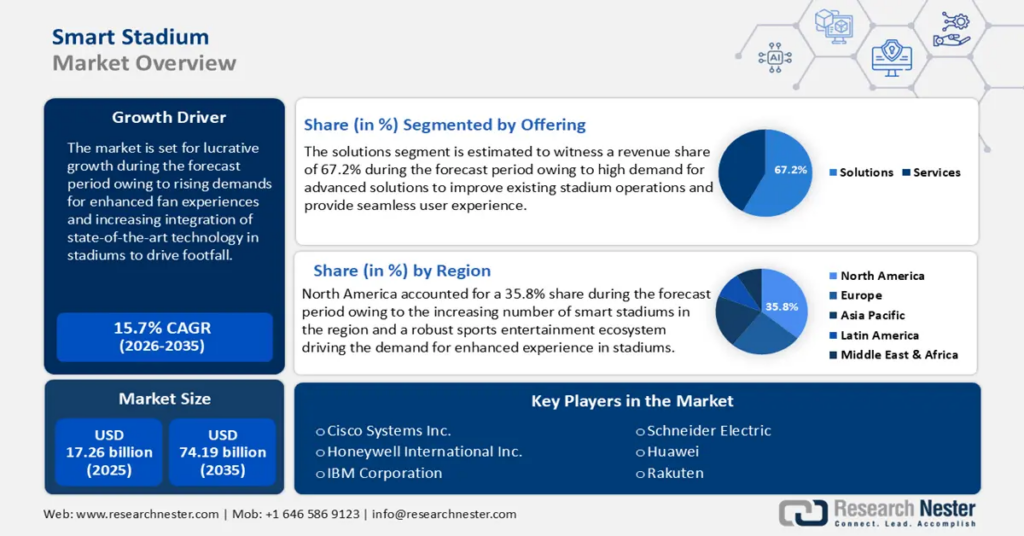
The adoption curve is steep: the global smart stadium market is expected to surpass $21 billion by 2025, driven by energy optimization, occupancy analytics, and connected infrastructure. For sports facilities, that technology is filtering down fast, from major arenas to community centers, because the ROI is tangible and local.
Source: Research Nester
3. Dynamic Pricing and Digital Membership Platforms
With competition rising and margins tightening, the smartest operators are optimizing space and time. Cloud-based booking engines now use yield management to adjust pricing by demand, raising rates during peak hours and incentivizing off-peak use through automated discounts.
According to IBISWorld’s Indoor Sports Facilities Management report, the U.S. market has grown to $1.7 billion with more than 9,500 active businesses, reflecting a fragmented landscape where localized pricing agility can make or break profitability.
Beyond pricing, these platforms double as digital relationship managers. They automate recurring memberships, enable self-service check-ins, and sync payments with access control systems.
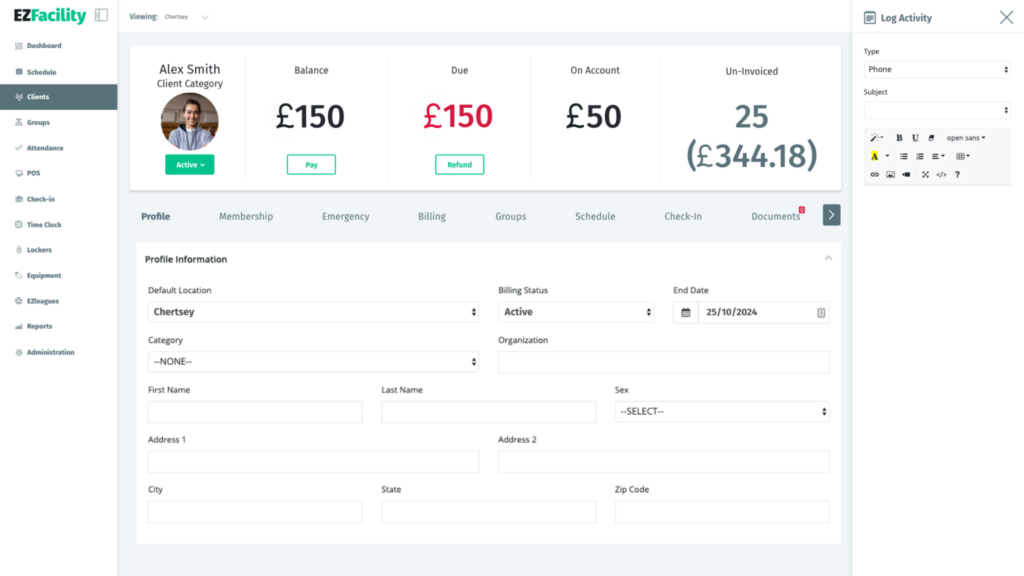
EZFacility’s sports club membership sits at the heart of this shift. It unifies scheduling, membership management, and billing into one system that automates renewals, handles recurring payments, and tracks attendance. Members can register, pay, and check schedules through a single online portal or branded mobile app, while administrators see instant insights into revenue, occupancy, and engagement.
4. Energy Management and Decarbonization Technology
High-load venues like rinks and indoor pools are adopting variable frequency drives (VFDs), advanced building management systems (BMS), and heat recovery units to reclaim waste energy from refrigeration and HVAC. IBISWorld’s report highlights utilities as one of the top controllable cost drivers in the sector, with many operators now tying ROI directly to energy savings.
Technology adoption is also being driven by compliance and financing realities. Sustainable upgrades, LED retrofits, refrigerant conversions, and demand-response automation are increasingly prerequisites for grants and sponsorships, especially as municipalities tighten carbon benchmarks. The Ecotrak Facilities Outlook notes that organizations prioritizing measurable sustainability initiatives are seeing faster payback periods and more substantial public goodwill.
5. Mobile-First Customer Experience
The modern member expects every part of their sports club experience, booking, check-in, payments, and updates, to live on their phone.
For operators, mobile access shortens queues, reduces admin load, and turns casual users into long-term members through seamless self-service. Members can book classes, manage payments, and receive instant notifications without ever calling the front desk. The Ecotrak Facilities Outlook notes that facilities adopting mobile workflows report faster member response times and higher renewal rates than those relying on email or manual scheduling.
EZFacility embodies this shift through its custom-branded mobile app, available on both Apple and Android stores. The app lets members:
- Book and cancel sessions in real time with live schedule visibility
- Receive push notifications for class openings, promotions, or updates
- Access social and loyalty tools, linking their achievements directly to social media
- Add digital member cards to mobile wallets, streamlining check-ins and access control
Here’s a quick sneak peek:
6. Cybersecurity and Data Governance
Cloud-based facility systems now process payment information, youth participant data, and staff credentials daily. A single breach can jeopardize member trust and trigger major financial penalties. According to FutureDataStats, the global sports venue management software market is expanding rapidly, but nearly 40% of operators cite data protection as their top technology challenge for 2025.
That’s why facility platforms are hardening by design. EZFacility, for example, is PCI DSS Level 1 certified and hosted on AWS with 99.99% uptime, ensuring secure data encryption and strict access controls. The platform also offers role-based permissions and secure payment integrations, protecting both administrators and members from unauthorized access or data misuse.
H2: Preparing for the Future: Action Plan for Facility Managers
The best-run sports facilities plan for change. This 12-month roadmap helps you align technology, staff, and budgets so your club stays competitive through 2025 and beyond. Use it as a living checklist to track progress quarter by quarter.
Build a Smarter, Greener, Engaging Future
Whether it’s predictive maintenance, connected sensors, or a mobile-first member experience, the goal is to create venues that perform better for people and for the planet.
And EZFacility makes that shift achievable. By uniting scheduling, memberships, billing, and engagement in one intuitive system, EZFacility helps clubs simplify operations, cut waste, and keep members connected through branded, mobile-first experiences.
Your next game-changer runs on 99.99% uptimeEZFacility grows with your sports club—from automated payments to branded apps—all on a PCI DSS Level 1 certified, AWS-hosted platform |